FSW ALUMINIUM COOLING PLATES
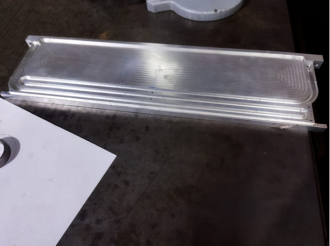
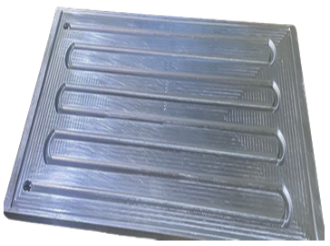
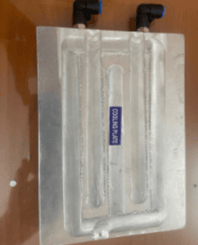
Cooling plates are critical thermal management components used in electric vehicles, batteries, power electronics, aerospace, and renewable energy systems. The Friction Stir Welding (FSW) process enables the manufacturing of high-performance cooling plates with excellent thermal conductivity, leak-proof channels, and robust mechanical strength. Unlike conventional joining methods, FSW is a solid-state process that eliminates defects such as porosity, cracks, or weak joints, ensuring superior reliability in demanding applications.
Why FSW for Cooling Plates?
Solid-State Joining –
No melting of base metal ensures minimal distortion and preserves material properties.
High Thermal Conductivity -
Joints free from porosity or filler materials allow efficient heat transfer..
Enhanced Leak-Tightness -
FSW creates fully sealed channels for coolant circulation, preventing leaks.
Material Flexibility –
Aluminum alloys commonly used for cooling plates are highly compatible with FSW.
Eco-Friendly Manufacturing –
No filler wires, flux, or shielding gases required, making it cost-effective and sustainable.
Manufacturing of Cooling Plates by Friction Stir Welding (FSW) Process
- Plate Preparation – Aluminum sheets are machined to create internal coolant channels or grooves.
- Cover Plate Placement – A cover sheet is positioned over the machined plate to seal the coolant channels.
- Friction Stir Welding – A rotating FSW tool moves along the joint line, generating frictional heat and plastic deformation to bond the plates together without melting the material.
- Post-Processing – Final surface finishing, precision machining, and leak testing are carried out to ensure dimensional accuracy and reliable cooling performance.
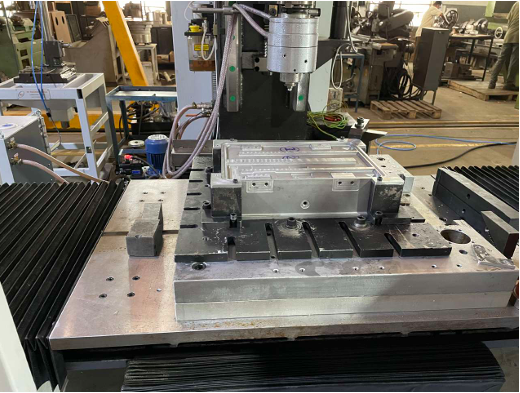
Fixing of the Base plate in the Fixture
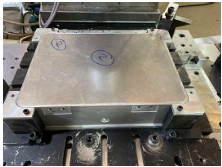
Clamping of the Platet
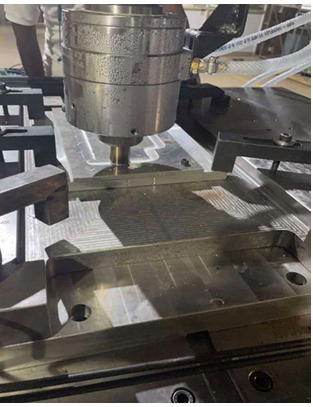
FSW Process
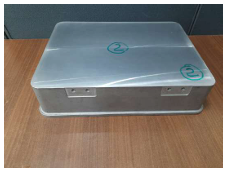
After Post-Processing of the part
Technical Features
- Channel Design Options: Straight, serpentine, pin-fin, and custom patterns.
- Material Options: High-strength aluminium alloys (e.g., 6061, 6082, 7075) and copper-aluminium hybrid designs.
- Weld Quality: Defect-free joints with high pressure resistance.
- Thickness Range: Typically, 2 mm – 15 mm depending on design.
- Thermal Performance: High heat dissipation capacity, supporting liquid cooling up to 10–20 kW depending on geometry.
- Surface Finish: Anodized or coated for corrosion resistance.
Applications
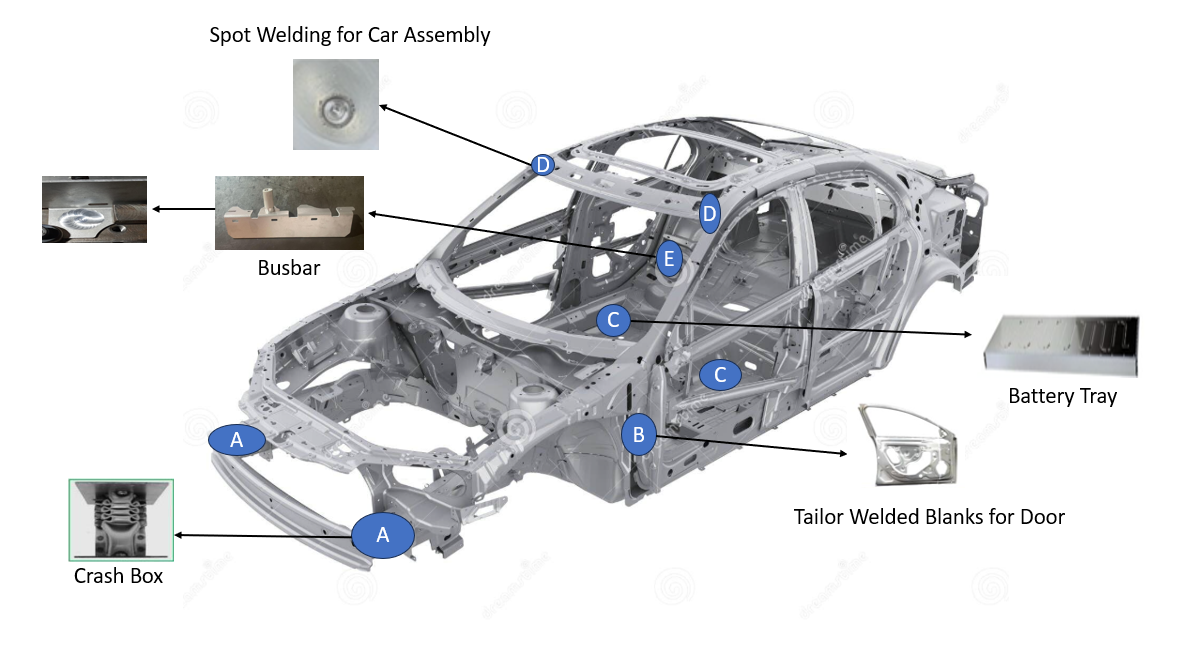
- EV Battery Packs – Liquid-cooled battery thermal management.
- Power Electronics – Inverters, DC-DC converters, and chargers.
- Aerospace Systems – Avionics and high-power electronic modules.
- Renewable Energy – Cooling for wind and solar inverters.
- Industrial Automation – Thermal management of high-performance drives.
Key Advantages
- Leak-Proof Reliability – 100% tested under high-pressure conditions.
- Lightweight & Strong – Ideal for weight-sensitive applications like EVs and aerospace.
- High Efficiency – Superior cooling improves performance and lifetime of devices.
- Scalable Production – Suitable for both prototype and mass manufacturing.
- Cost-Effective – Reduced post-processing, no consumables, and long tool life.

Chat with Us